
Introduction
The metaverse, once a term confined to science fiction, has become a central topic in discussions about the future of technology and society. This interconnected, immersive digital world allows users to interact in real-time through avatars, merge physical and virtual realities, and create spaces where creativity and technology intersect.
In 2021, Facebook’s rebranding to Meta brought the concept into the global spotlight, sparking widespread interest and debate. While the metaverse’s potential is enormous, so are its complexities and challenges. How will it shape our daily lives? What new opportunities does it offer for individuals, businesses, and communities? This article delves into the evolution, applications, and future of the metaverse, exploring its profound impact on human experience.
I. Understanding the Metaverse: A Conceptual Foundation

1. Definition and Origins
The term “metaverse” first appeared in Neal Stephenson’s 1992 novel Snow Crash, where it described a fully immersive digital universe accessible through virtual reality (VR). In Stephenson’s vision, the metaverse was a refuge from the dystopian world, offering an escapist virtual society.
The metaverse today is much broader. It represents a persistent, shared digital space where users interact through avatars, create digital assets, and engage in activities ranging from gaming to education. Unlike traditional digital experiences, the metaverse combines immersion, real-time interactivity, and user-generated content to create a seamless virtual environment.
Early examples include Second Life (2003), a virtual world where users could buy land, socialize, and create content, laying the foundation for what we now understand as the metaverse.
2. Core Technologies Powering the Metaverse
The metaverse relies on a suite of advanced technologies that enable its immersive and interactive experiences:
- Virtual Reality (VR): Devices like Oculus Quest and HTC Vive offer fully immersive environments where users can explore 3D worlds.
- Augmented Reality (AR): Tools like Microsoft HoloLens overlay digital elements on the real world, blending physical and virtual realities.
- Blockchain: Enables decentralized ownership of digital assets, including cryptocurrencies and non-fungible tokens (NFTs), essential for metaverse economies.
- Artificial Intelligence (AI): Powers dynamic interactions, personalized experiences, and content creation.
- 5G and Cloud Computing: Provide the infrastructure for real-time connectivity, enabling seamless interactions and large-scale virtual spaces.
3. Metaverse vs. Traditional Internet
The metaverse represents a paradigm shift from the traditional internet. While the internet offers static and two-dimensional experiences, the metaverse immerses users in three-dimensional, real-time environments. Unlike scrolling through a website or watching a video, the metaverse allows individuals to “live” in digital spaces, interacting with content and other users in a way that feels tangible.
Key differences include:
- Interactivity: Enhanced user participation through avatars and real-time collaboration.
- Immersion: The metaverse uses VR and AR to blur the line between physical and digital worlds.
- Persistence: Unlike websites or apps, the metaverse is always “on,” with environments evolving over time.
II. The Evolution of the Metaverse
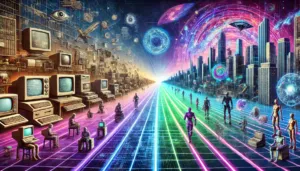
1. Early Days: Virtual Worlds and Gaming
The metaverse’s roots lie in gaming. Early platforms like World of Warcraft (2004) and Runescape (2001) introduced players to shared digital spaces where they could socialize, trade, and collaborate on quests. These games created proto-metaverses with persistent worlds and economies driven by player interactions.
Later, Minecraft (2011) and Fortnite (2017) expanded these ideas, blending gaming with creative freedom and live events. For example, Fortnite hosted a virtual concert by Travis Scott in 2020, attracting over 12 million participants and demonstrating the metaverse’s potential for large-scale events.
2. Tech Giants Enter the Scene
The metaverse gained mainstream attention when Facebook rebranded to Meta in 2021, signaling its commitment to creating a unified virtual world. Meta has invested billions in developing VR technologies like Oculus and platforms like Horizon Worlds, aiming to dominate the metaverse space.
Other tech giants followed suit:
- Microsoft: Focused on enterprise applications with Microsoft Mesh, enabling virtual collaboration for businesses.
- Google: Developing AR tools and cloud infrastructure to support metaverse experiences.
- Apple: Rumored to be working on AR glasses that could revolutionize how users interact with virtual content.
3. The Role of Blockchain
Blockchain has become a cornerstone of metaverse ecosystems, enabling decentralized ownership and secure transactions. Key innovations include:
- NFTs: Non-fungible tokens allow users to own unique digital assets, from virtual real estate to artwork.
- Decentralized Platforms: Projects like Decentraland and The Sandbox let users buy, build, and monetize virtual spaces without relying on centralized authorities.
III. The Metaverse in Everyday Life
1. Social Interactions
The metaverse is redefining social interactions by creating spaces where people can connect without physical constraints. Platforms like VRChat and Horizon Worlds allow users to:
- Attend virtual parties, concerts, and conferences.
- Build and customize avatars to express their identities.
- Form global communities around shared interests.
2. Education and Training
Education has been revolutionized by the metaverse. Virtual classrooms enable students to:
- Explore historical events through simulations.
- Conduct science experiments in risk-free environments.
- Participate in interactive lessons that enhance engagement.
Corporations are also leveraging the metaverse for employee training, offering VR simulations for industries like healthcare, aviation, and manufacturing.
3. Healthcare Innovations
The metaverse is advancing healthcare in several ways:
- VR Therapy: Treating conditions like PTSD, anxiety, and chronic pain through immersive therapy.
- AR in Surgery: Assisting surgeons with real-time visualization and precision tools.
4. Work and Collaboration
Remote work is evolving into virtual workspaces. Platforms like Spatial and Microsoft Mesh enable:
- Real-time collaboration in 3D environments.
- Virtual meetings that simulate in-person interactions.
- Enhanced productivity through immersive tools.
5. Entertainment and Media
The metaverse is reshaping entertainment, offering:
- Virtual Concerts: Events like Ariana Grande’s Fortnite concert drew millions of fans.
- Immersive Films: Interactive VR movies allow viewers to participate in stories.
- Gaming Experiences: Players can explore expansive worlds and participate in events that merge reality and fantasy.
IV. Economic Implications of the Metaverse
1. The Rise of Virtual Economies
Virtual economies are thriving within the metaverse:
- Players can buy and sell digital assets, from clothing for avatars to virtual properties.
- Platforms like Decentraland enable users to earn real-world income by developing and renting virtual spaces.
2. Job Creation
The metaverse has created new professions, including:
- Virtual architects who design digital environments.
- Content creators who develop interactive experiences.
- Community managers who oversee metaverse platforms.
3. Risks and Challenges
Economic challenges include:
- Wealth Inequalities: High entry costs may exclude some users.
- Fraud: The decentralized nature of the metaverse can make it vulnerable to scams.
V. Challenges and Ethical Considerations
1. Privacy and Security
The metaverse raises significant privacy concerns:
- Companies could collect vast amounts of data about users’ behaviors and interactions.
- Ensuring secure transactions and protecting users from identity theft are critical.
2. Digital Divide and Accessibility
To make the metaverse inclusive:
- Hardware costs must be reduced.
- Efforts are needed to improve internet infrastructure in underserved areas.
3. Mental Health Implications
While the metaverse offers opportunities for connection, it also poses risks:
- Overuse can lead to social isolation and addiction.
- Balancing virtual and real-life interactions is essential for well-being.
VI. The Future of the Metaverse
1. Short-Term Developments
In the near term, we can expect:
- Lightweight VR headsets that make the metaverse more accessible.
- Decentralized platforms that empower users to create and own content.
2. Long-Term Vision
Over the next decade, the metaverse is likely to:
- Become integrated into daily life, from shopping to fitness.
- Enable seamless transitions between digital and physical spaces.
3. Predictions and Expert Insights
Industry leaders predict:
- The metaverse will drive innovation across sectors like healthcare, education, and entertainment.
- Societal shifts, such as virtual citizenship and decentralized governance, may emerge.

VII. Conclusion
The metaverse represents a groundbreaking shift in how humans interact with technology and each other. As it continues to evolve, it holds the potential to enhance lives, revolutionize industries, and unite global communities. However, realizing this vision requires addressing challenges around privacy, accessibility, and ethical design.
Embracing the Metaverse: Whether as a user, developer, or entrepreneur, now is the time to explore the metaverse and its transformative possibilities.
