
Artificial Intelligence (AI) has become a game-changer in various industries, and the on-demand services sector is at the forefront of this revolution. By leveraging AI, businesses in this space are improving operational efficiency, personalizing customer experiences, and scaling their operations like never before. This article provides a deep dive into artificial intelligence in on-demand services, examining its definition, applications, challenges, and future innovations.
What Is Artificial Intelligence in On-Demand Services?

1.1 The Definition of Artificial Intelligence
Artificial Intelligence is a branch of computer science that enables machines to perform tasks that typically require human intelligence. These tasks include learning, reasoning, problem-solving, and natural language processing. AI systems are powered by algorithms that analyze vast amounts of data, identify patterns, and make informed decisions or predictions.
In on-demand services, AI acts as a backbone technology that drives automation, enhances customer satisfaction, and provides real-time insights. It is not just about replacing manual tasks but also about making processes smarter and more adaptive to consumer needs.
1.2 Role of AI in On-Demand Platforms
On-demand platforms like Uber, Netflix, and Amazon Prime rely heavily on AI to manage their operations and deliver high-quality user experiences. Learn more about how AI is reshaping industries Some key roles of AI in these platforms include:
- Demand Prediction: AI analyzes historical data and current market trends to forecast demand for services or products.
- Resource Allocation: Whether it’s assigning drivers in ride-hailing apps or matching orders with delivery personnel, AI ensures optimal allocation of resources.
- Automation of Repetitive Tasks: Tasks like order processing, payment handling, and inventory updates are automated, reducing human errors and saving time.
- Enhanced Customer Interactions: AI-powered chatbots and virtual assistants provide instant responses to user queries, improving satisfaction levels.
For instance, Uber uses AI to predict areas where demand for rides will surge, ensuring that drivers are proactively positioned to meet this demand. Similarly, Netflix employs AI to recommend movies and shows based on a user’s watch history, keeping engagement high.
1.3 How AI Supports Scalability
Scalability is one of the biggest challenges for any on-demand service, particularly as consumer expectations rise. AI plays a pivotal role in ensuring that these platforms can grow without compromising on quality or efficiency.
- Automation at Scale: AI can handle millions of transactions simultaneously, making it possible for businesses to expand without requiring proportional increases in workforce size.
- Data-Driven Decision Making: AI tools provide actionable insights that help businesses identify opportunities for growth and improvement.
- Adaptability: AI systems are designed to learn and improve over time, making them highly adaptable to changing market dynamics.
For example, food delivery platforms like DoorDash and Swiggy use AI to process thousands of orders simultaneously, ensuring that deliveries are made promptly, even during peak hours.

How AI Enhances On-Demand Service Experiences

2.1 AI in Customer Support Systems
Customer support is a critical aspect of on-demand services, and AI is transforming how companies interact with their customers. Traditional support systems often struggle with high volumes of requests, leading to delays and dissatisfaction. Explore AI advancements in customer service. AI addresses these issues through:
- Chatbots: These AI-powered assistants provide instant responses to user queries, resolving common issues like order tracking, cancellations, and refunds without human intervention.
- Natural Language Processing (NLP): AI systems understand and process human language, enabling more accurate and context-aware responses.
- Sentiment Analysis: AI analyzes the tone and sentiment of customer messages, allowing businesses to prioritize and address urgent or negative feedback effectively.
A case in point is Amazon, which uses AI chatbots to handle customer queries efficiently, ensuring a seamless support experience.
2.2 Predictive Analytics and Demand Optimization
Predictive analytics is one of the most powerful tools AI offers to on-demand services. It involves analyzing historical and real-time data to forecast future trends and make proactive decisions. Dive deeper into predictive analytics in business. In this context, predictive analytics is used for:
- Demand Forecasting: AI identifies patterns in user behavior, weather conditions, and events to predict demand surges.
- Dynamic Pricing: Ride-hailing services like Uber use AI to adjust prices based on real-time demand and supply, ensuring balance and maximizing revenue.
- Inventory Management: For platforms dealing with physical goods, AI helps optimize stock levels, minimizing waste and ensuring timely availability.
For instance, Grubhub uses predictive analytics to estimate delivery times accurately, enhancing customer satisfaction and operational efficiency.
2.3 Personalized User Experiences with AI
In today’s competitive market, personalization is a key differentiator for on-demand services. AI enables businesses to deliver highly customized experiences by:
- Analyzing User Data: AI systems analyze user preferences, behavior, and demographics to offer tailored recommendations.
- Customized Promotions: AI identifies which promotions are likely to resonate with individual users, increasing engagement and conversion rates.
- Voice and Visual Search: Advanced AI technologies enable users to interact with platforms through voice commands or image-based searches, making the experience more intuitive.
Netflix, for example, leverages AI to recommend content based on what users have previously watched, ensuring that viewers remain engaged with the platform.
Machine Learning’s Role in On-Demand Service Platforms
3.1 Delivery Route Optimization
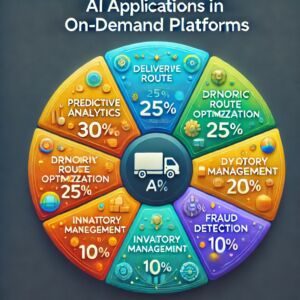
Machine learning (ML), a subset of AI, plays a crucial role in optimizing delivery routes for on-demand services. By analyzing traffic conditions, weather, and delivery locations, ML algorithms determine the most efficient routes, saving time and resources. Learn about AI applications in logistics.
- Real-Time Updates: Platforms like DoorDash use ML to update delivery routes dynamically, accounting for road closures or unexpected traffic.
- Cost Reduction: Efficient routes reduce fuel consumption and delivery times, improving profitability.
3.2 Inventory Management Through AI
Managing inventory is a complex task for on-demand platforms dealing with physical goods. ML simplifies this by:
- Predicting Demand: Algorithms analyze sales patterns to forecast inventory needs accurately.
- Minimizing Wastage: Perishable goods, such as food, benefit from precise demand forecasts, reducing spoilage.
3.3 Dynamic Pricing Models
Dynamic pricing is a hallmark of on-demand services. ML enables this by analyzing various factors, such as demand levels, competitor pricing, and time of day. Understand how dynamic pricing works. This ensures that:
- Prices Reflect Value: During high-demand periods, prices increase to incentivize supply.
- Fair Compensation: Service providers, like drivers, are fairly compensated for working during peak times.
Uber and Lyft are pioneers in implementing ML-based dynamic pricing, ensuring efficient matching of supply and demand.
Future Innovations in Artificial Intelligence for On-Demand Services
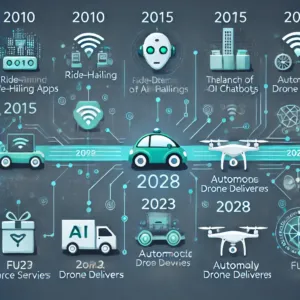
As artificial intelligence (AI) continues to evolve, its applications in the on-demand services industry will expand, offering groundbreaking innovations. These future advancements will not only redefine customer experiences but also enhance operational efficiency and scalability. Here are some of the most anticipated innovations in artificial intelligence in on-demand services:
4.1 Voice-Driven Interactions
Voice-activated AI systems are transforming how users interact with on-demand platforms. By integrating voice-driven assistants like Amazon Alexa, Google Assistant, and Apple Siri, businesses can offer hands-free convenience to their users.
Benefits of Voice-Driven AI
- Faster Transactions: Users can order services or products simply by speaking, bypassing the need to navigate through apps or websites.
- Accessibility: Voice technology makes services more accessible to individuals with disabilities or those unfamiliar with traditional interfaces.
- Enhanced Search Capabilities: AI-driven voice search improves accuracy by understanding natural language queries and delivering personalized results.
For example, food delivery apps could allow users to place orders by saying, “Order my favorite pizza from Domino’s,” without opening the app.
The Role of NLP
Natural Language Processing (NLP) enables voice-driven AI to understand context and intent, making interactions seamless and intuitive. This technology is expected to become a standard feature across all on-demand platforms in the coming years.
4.2 Autonomous Delivery Solutions
The rise of autonomous delivery systems, including drones and self-driving vehicles, will revolutionize last-mile logistics. AI-powered robots and vehicles are already being tested by companies like Amazon, FedEx, and Domino’s Pizza to deliver goods faster and more efficiently. Read about the future of autonomous delivery.
Key Advantages of Autonomous Delivery
- Cost Savings: Eliminating the need for human drivers reduces operational costs.
- Faster Delivery: Drones and autonomous vehicles can bypass traffic, ensuring quicker deliveries.
- Eco-Friendly Solutions: Electric-powered drones and vehicles reduce the carbon footprint of delivery services.
Real-World Examples
- Amazon Prime Air: This drone delivery service aims to deliver packages in 30 minutes or less.
- Nuro: A self-driving delivery vehicle designed specifically for small package deliveries, making local logistics faster and safer.
4.3 Augmented Reality (AR) with AI
Augmented Reality (AR) combined with AI is set to transform customer experiences, particularly in sectors like e-commerce, home services, and real estate. AR allows users to visualize products or services in their environment before making a purchase. Explore AR innovations.
Applications of AR with AI
- Virtual Try-Ons: AI-powered AR lets users try on clothes, accessories, or makeup virtually, enhancing their online shopping experience.
- Home Visualization: Users can see how furniture or decor items will look in their homes before purchasing.
- Interactive Tutorials: For home services, AR can guide users through tasks like setting up a device or assembling furniture.
For example, IKEA’s app uses AI-driven AR to help customers visualize how furniture will look in their space, eliminating guesswork and increasing buyer confidence.
Overcoming Challenges in AI Implementation
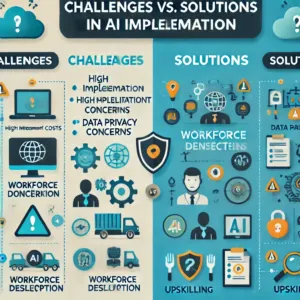
While the potential of AI in on-demand services is immense, there are several challenges businesses face when adopting this technology. Addressing these issues is crucial for the successful integration of AI systems.
5.1 High Costs of AI Implementation
Developing and maintaining AI-driven systems requires substantial investment. Small and medium-sized enterprises (SMEs) often struggle to allocate the necessary resources for:
- Data Collection and Management: AI relies on large datasets, which require secure storage and analysis infrastructure.
- Software Development: Building AI algorithms and integrating them into existing platforms can be expensive.
- Continuous Updates: AI systems need constant updates to improve accuracy and adapt to changing trends.
Solutions
- AI-as-a-Service: Companies like AWS, Google Cloud, and Microsoft Azure offer affordable AI solutions that allow businesses to access advanced technologies without significant upfront costs.
- Collaborative Partnerships: Partnering with AI-focused startups can help businesses access cutting-edge technology without developing it in-house.
5.2 Data Privacy and Security Risks
AI systems process vast amounts of user data to deliver personalized services, raising concerns about privacy and security. Breaches or misuse of this data can lead to legal issues and loss of customer trust. Learn about GDPR compliance for businesses.
Challenges in Data Management
- Regulatory Compliance: Businesses must adhere to data protection regulations like GDPR, CCPA, and HIPAA.
- Cybersecurity Threats: AI systems are vulnerable to hacking and data breaches.
- User Consent: Transparent data collection practices are essential to maintain trust.
Solutions
- Data Encryption: Encrypting data ensures that sensitive information is secure, even if breaches occur.
- Ethical AI Practices: Companies must prioritize transparency and fairness in data handling.
5.3 Workforce Displacement
As AI automates tasks previously handled by humans, there is growing concern about job displacement. Discover strategies for upskilling the workforce. For example:
- Customer Support: AI chatbots may reduce the need for human agents.
- Logistics: Autonomous delivery vehicles could replace drivers.
Mitigating Workforce Impact
- Upskilling Programs: Companies should invest in training programs to help employees transition into roles that require human creativity and critical thinking.
- New Job Opportunities: AI creates demand for roles in areas like AI system development, data analysis, and maintenance.
Conclusion
Artificial intelligence in on-demand services is a transformative force that is redefining how businesses operate and interact with customers. By enabling automation, personalization, and operational efficiency, AI has become the backbone of platforms like Uber, Netflix, and Amazon.
While the future promises exciting innovations such as voice-driven interactions, autonomous delivery systems, and AR experiences, businesses must also address challenges like high implementation costs, data privacy, and workforce impact. By adopting ethical AI practices and prioritizing inclusivity, the on-demand services sector can harness the full potential of AI, ensuring a smarter, more connected future for businesses and consumers alike.
FAQs About AI in On-Demand Services
Q1: How is AI transforming on-demand services?
A: AI is enhancing on-demand services by enabling real-time decision-making, predictive analytics, personalized user experiences, and automated customer support. It helps businesses operate more efficiently and meet customer needs faster.
Q2: What industries are most impacted by AI-driven on-demand solutions?
A: Industries such as ride-hailing, food delivery, healthcare, home services, and eCommerce are seeing significant improvements through AI. From smarter route planning to automated order fulfillment, AI is optimizing service delivery across the board.
Q3: How does AI improve customer experience in on-demand platforms?
A: AI personalizes recommendations, predicts user preferences, automates chats via virtual assistants, and ensures faster and more accurate service fulfillment—resulting in a smoother, more satisfying user journey.
Q4: Is AI in on-demand services secure and privacy-compliant?
A: Leading AI-powered platforms prioritize data security and comply with privacy regulations such as GDPR and CCPA. However, it’s essential to ensure that AI models are trained ethically and data is anonymized where necessary.
Q5: What is the future of AI in the on-demand economy?
A: The future includes hyper-personalized services, voice-enabled bookings, drone deliveries, and fully autonomous service dispatching. AI will continue to innovate how services are requested, delivered, and improved over time.
