
1. Understanding AI and Human Creativity
What Is AI Creativity? Exploring AI vs. Human Creativity
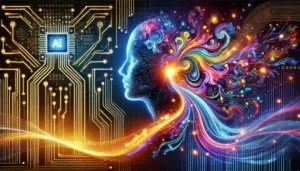
AI creativity refers to the ability of artificial intelligence systems to generate original and meaningful outputs in domains traditionally driven by human imagination, such as art, music, and literature. This concept lies at the heart of the ongoing debate about AI vs. Human Creativity.
AI creative systems utilize advanced technologies like algorithms, neural networks, and deep learning models to analyze massive datasets, identify patterns, and produce outputs. For instance, tools such as OpenAI’s DALL-E and MidJourney allow users to input textual descriptions, which are then transformed into visually stunning artwork.
Some prominent examples of AI-driven creativity include:
- Generative Adversarial Networks (GANs): These are employed to craft lifelike images, unique designs, and even surreal artistic expressions. GANs enable AI to simulate creativity by pitting two networks against each other to refine results.
- Language Models: Advanced models like GPT-4 showcase AI’s potential to write poetry, craft compelling narratives, and script plays, often indistinguishable from human-created works.
However, despite these advancements, AI remains a tool rather than a creator in the truest sense. Critics argue that true creativity requires emotional depth, cultural context, and a profound understanding of the human experience—elements AI lacks. While AI can replicate and innovate within set parameters, it cannot yet match the spontaneity and originality that define human ingenuity.
The exploration of AI vs. Human Creativity reveals both the promise and limitations of artificial intelligence in creative fields. While AI can enhance and expand creative possibilities, the human touch remains irreplaceable in crafting works that resonate deeply with emotions and cultural significance.
Defining Human Creativity
Human creativity emerges from the unique interplay of emotions, experiences, and cultural contexts. Unlike AI, human creators draw inspiration from their feelings, personal struggles, and innate curiosity. Creativity is not just about producing something new but also about imbuing it with meaning and relevance.
For example:
- Art: A painter might reflect their emotions or socio-political commentary in their work.
- Music: A composer weaves their personal experiences into melodies that resonate emotionally with listeners.
Human creativity also thrives on collaboration, intuition, and spontaneity—qualities that AI has yet to replicate convincingly.
Discover More About AI Creativity: Unpacking AI vs. Human Creativity
The ongoing debate of AI vs. Human Creativity has sparked curiosity and innovation across industries. As artificial intelligence continues to evolve, it’s reshaping how we think about creativity and its applications in art, music, writing, and beyond. But what exactly does AI creativity entail, and how does it compare to human ingenuity?
AI creativity refers to the ability of machines to generate original outputs by analyzing data, identifying patterns, and applying algorithms. Tools like OpenAI’s DALL-E, MidJourney, and ChatGPT demonstrate AI’s capacity to create compelling artwork, engaging narratives, and even musical compositions. These tools have revolutionized creative fields, making tasks faster and more efficient while opening doors to new possibilities.
However, the essence of creativity lies in the emotional depth and cultural understanding that humans bring to their work. AI, while powerful, operates within the constraints of its programming and lacks the ability to experience emotions or draw inspiration from personal experiences. This distinction forms the crux of the AI vs. Human Creativity discussion.
Exploring this dynamic further reveals the potential for collaboration. AI enhances human creativity by serving as a tool that complements human efforts. For instance, AI can generate ideas or automate repetitive tasks, freeing up time for creators to focus on innovation and expression.
Ultimately, understanding the balance between AI vs. Human Creativity helps us envision a future where humans and machines collaborate harmoniously, pushing the boundaries of what’s creatively possible.
Understand the Psychology of Human Creativity: A Key Aspect of AI vs. Human Creativity
In the ongoing exploration of AI vs. Human Creativity, understanding the psychology behind human creativity is essential. Human creativity is a deeply intricate process shaped by emotions, experiences, and cognitive abilities, making it a unique and irreplaceable facet of our existence.
At its core, human creativity stems from a combination of divergent and convergent thinking. Divergent thinking involves generating multiple ideas and exploring possibilities, while convergent thinking helps refine these ideas into practical and innovative solutions. This dynamic process is driven by imagination, intuition, and the ability to draw connections between seemingly unrelated concepts.
Unlike AI, which relies on algorithms and data, human creativity is fueled by emotions and personal experiences. Inspiration often comes from joy, sorrow, conflict, or triumph—emotions that machines cannot replicate. For instance, a poet might draw from heartbreak to craft a poignant verse, or an artist might channel societal struggles into a masterpiece.
This emotional depth highlights a key distinction in the AI vs. Human Creativity debate. While AI can mimic creative processes by analyzing patterns and generating outputs, it lacks the intrinsic motivation and contextual understanding that define human ingenuity. AI operates within the parameters of its programming, making it incapable of the spontaneous leaps of thought that characterize human innovation.
By understanding the psychology of human creativity, we gain a clearer perspective on the unique strengths humans bring to the creative process. This understanding also emphasizes the potential for synergy in the AI vs. Human Creativity discussion—where AI serves as a tool to enhance, rather than replace, the boundless creativity of the human mind.
2. The Evolution of AI Creativity
Early Beginnings
AI’s journey into the creative realm started in the mid-20th century. Initial systems were rudimentary and rule-based, following predefined sets of instructions to generate outputs.
Notable examples include:
- AARON (1973): A program designed by Harold Cohen to create abstract art. Although simplistic by today’s standards, it was a groundbreaking exploration of machine-generated creativity.
- ELIZA (1966): A chatbot that mimicked therapeutic conversations, showcasing an early attempt at human-like interaction.
Modern Developments
Advancements in machine learning and neural networks have propelled AI creativity to new heights. Today’s AI systems are capable of analyzing intricate datasets to generate outputs that rival human-created works.
Key milestones include:
- DeepDream by Google: An AI tool that creates psychedelic and surreal imagery by interpreting neural network data.
- Generative Pre-trained Transformers (GPT): Capable of writing essays, creating poetry, and composing code.
- OpenAI’s DALL-E: A tool that generates high-quality images from textual descriptions, revolutionizing digital art.
AI is no longer confined to imitating human creativity but is beginning to forge its unique path, exploring styles and ideas that humans might never conceive.
3. Human Creativity in the Digital Age: Adapting to Technology in the Era of AI vs. Human Creativity

The digital age has revolutionized human creativity, providing unprecedented opportunities for individuals to express themselves in innovative ways. Tools such as Adobe Photoshop, Blender, and GarageBand have become indispensable for creators, enabling them to design stunning visuals, craft immersive animations, and produce professional-grade music directly from their desktops. This technological advancement has blurred the lines in the AI vs. Human Creativity debate, as humans increasingly rely on digital tools to enhance their creative endeavors.
Technology as a Catalyst for Creativity
Digital tools empower creators by expanding their capabilities and streamlining processes. Complex tasks that once required specialized skills or resources can now be accomplished with user-friendly software. For example, Photoshop simplifies photo manipulation, Blender opens the door to 3D modeling, and GarageBand allows anyone to compose music with just a few clicks. These tools democratize creativity, making it accessible to a broader audience.
Challenges Posed by Technology
However, these advancements bring challenges:
- Learning Curves: Mastering advanced software can be intimidating for beginners, requiring time and effort to achieve proficiency. This steep learning curve can deter aspiring creators from fully embracing digital tools.
- Standardization: The widespread use of presets, templates, and effects often leads to homogenized outputs. As more creators adopt similar styles, originality risks being diluted in favor of convenience.
Impact on Human Creativity
The digital age also introduces two significant challenges to human creativity:
- Over-Reliance on Technology: Some creators feel constrained by their tools, fearing that their reliance on software might limit originality. The concern arises that technology might overshadow the unique human touch in the creative process.
- Digital Overload: The vast amount of creative content available online can be overwhelming. Individual creators often struggle to stand out in a saturated digital landscape, making it difficult for their work to gain recognition.
Adapting and Thriving
Despite these challenges, human creativity has proven resilient, adapting to and evolving alongside technological advancements. Creators continue to find new ways to innovate, often combining traditional methods with digital tools to craft unique and meaningful works. This adaptability highlights the distinct strengths of human creativity in the AI vs. Human Creativity discussion.
While AI plays a significant role in enhancing creativity, it is ultimately the human ability to think emotionally, intuitively, and contextually that drives originality. In the digital age, humans and technology can complement each other, pushing the boundaries of what’s possible. The future of creativity lies not in competition but in collaboration, where AI serves as a tool that amplifies, rather than replaces, human ingenuity.
By embracing both the opportunities and challenges of the digital age, human creativity continues to thrive, proving its enduring value in an increasingly technological world.
4. AI as a Creative Tool: Enhancing Innovation in AI vs. Human Creativity
In the debate surrounding AI vs. Human Creativity, AI is increasingly viewed not as a competitor but as a powerful tool that enhances human ingenuity. By complementing human effort, AI enables creators to push boundaries, streamline processes, and unlock new possibilities across various creative domains.
How AI Enhances Human Creativity
AI serves as an innovative partner in the creative process, offering support in multiple ways:
- Idea Generation: AI tools like ChatGPT and other generative models provide inspiration and suggestions, helping creators overcome challenges like writer’s block or brainstorming constraints. These tools analyze patterns, trends, and existing works to generate fresh ideas, acting as a creative springboard for human creators.
- Efficiency: By automating repetitive and time-consuming tasks, AI allows creators to focus on the bigger picture. For example, AI can handle photo retouching, sound mastering, or even generating basic design drafts, freeing up time for humans to refine and innovate.
Case Studies: AI in Action
AI’s role in enhancing creativity is evident in its applications across industries:
- Film and Media: In the film industry, AI is used to generate realistic special effects, storyboard sequences, and even write dialogue. These technologies streamline production processes while maintaining high-quality outputs. For example, AI can create lifelike digital characters or simulate complex environments, enabling filmmakers to bring their visions to life with unprecedented precision.
- Product Design: Generative design AI is transforming how products are conceptualized. By creating multiple iterations of a design, AI optimizes for aesthetics, functionality, and efficiency. Companies use this technology to innovate faster and produce designs tailored to user needs, demonstrating AI’s ability to augment human creativity in problem-solving.
AI as an Enabler, Not a Competitor
The role of AI as an enabler underscores its potential to augment, rather than compete with, human creativity. While AI excels in efficiency and data-driven ideation, it cannot replicate the emotional depth, cultural context, and intuition that define human ingenuity. This distinction highlights the synergy between humans and machines, where AI serves as a tool to amplify human potential.
Collaboration Over Competition
In the ongoing exploration of AI vs. Human Creativity, the future lies in collaboration. By leveraging AI’s strengths, creators can achieve results that are more innovative and impactful than what either humans or machines could accomplish alone. This partnership allows for a dynamic interplay where AI handles technical challenges, and humans focus on storytelling, emotional resonance, and originality.
As AI continues to evolve, its role as a creative tool will only grow more significant. By embracing this technology, creators can unlock new possibilities, ensuring that innovation thrives in the ever-changing landscape of creativity. The true power of AI vs. Human Creativity lies not in opposition but in synergy, where both forces unite to redefine what’s possible in the creative world.
5. Limitations of AI Creativity: Understanding AI vs. Human Creativity
In the ongoing debate of AI vs. Human Creativity, it is crucial to recognize the inherent limitations of AI-generated creativity. While AI has made remarkable strides in producing art, music, and writing, it lacks certain fundamental qualities that define human ingenuity.
- Lack of Genuine Emotions: AI can replicate emotions convincingly but does not experience them. This lack of emotional authenticity often results in creative outputs that, while technically impressive, feel hollow or disconnected from the human experience. True creativity often stems from deeply personal feelings, struggles, and triumphs—elements AI cannot replicate.
- Dependence on Data: AI creativity is bound by its training data. It analyzes patterns and combinations from existing works, which limits its ability to produce genuinely novel ideas. Unlike humans, who can draw inspiration from intuition, imagination, or even random epiphanies, AI operates strictly within the confines of its programming and data inputs.
- Ethical Concerns: The rise of AI-generated content raises critical questions about authenticity, authorship, and intellectual property. Who owns the rights to AI-created works? Can such works be considered truly original? These unresolved issues highlight the ethical complexities tied to AI creativity.
These limitations underscore the irreplaceable value of human creativity. Unlike AI, human creators are not constrained by algorithms or datasets. Their ideas are shaped by unique perspectives, cultural contexts, and emotional depth—qualities that machines cannot emulate.
Ultimately, the limitations of AI highlight the enduring distinction in the debate of AI vs. Human Creativity. While AI is a powerful tool that complements human efforts, it cannot replace the originality, empathy, and unpredictability that define human ingenuity.
6. The Ethics of AI in Creativity
Ownership and Authorship
Who owns AI-generated content? The creator of the AI, the user, or the AI itself? This gray area complicates the use and monetization of such outputs.
Impact on Employment
AI’s ability to automate creative tasks poses challenges for professionals in fields like design, writing, and animation.
Addressing Ethical Concerns
Policymakers and industry leaders are working to establish guidelines for the ethical use of AI in creative domains, ensuring fair practices and accountability.
- Explore Ethical AI Practices.
7. Collaboration: AI vs. Human Creativity
The most exciting potential in the debate of AI vs. Human Creativity lies in their collaboration. Rather than viewing artificial intelligence as a competitor, it can be embraced as a tool to enhance human ingenuity. By merging AI’s speed and analytical capabilities with human insight and emotional depth, creators can achieve groundbreaking results that neither could accomplish alone.
Collaborative efforts between AI and humans are already transforming various creative fields:
- Film Production: AI plays a crucial role in streamlining editing processes, generating realistic visual effects, and even analyzing audience preferences. However, the heart of storytelling—directorial vision and creative decision-making—remains firmly in human hands. This balance allows filmmakers to focus on artistic expression while AI handles repetitive or technical tasks.
- Music Composition: AI algorithms can generate unique beats and harmonies in seconds, offering musicians a creative springboard. Artists then bring in their lyrical prowess, emotional resonance, and melodies to craft songs that connect deeply with audiences. This partnership reduces the time spent on basic composition, enabling a sharper focus on innovation.
This synergy showcases the potential for AI and human creativity to coexist harmoniously. AI provides efficiency and fresh ideas drawn from vast datasets, while humans infuse creations with emotion, cultural context, and originality. Together, they redefine what is creatively possible, pushing boundaries in ways that neither could achieve alone.
Ultimately, AI vs. Human Creativity is less about competition and more about partnership. When leveraged effectively, AI becomes a powerful collaborator, helping humans amplify their creative potential while retaining the irreplaceable essence of human touch.
Conclusion: What the Future Holds
AI and human creativity are not adversaries but partners in a rapidly evolving landscape. While AI excels in generating and automating creative tasks, human ingenuity adds emotional depth, cultural relevance, and ethical considerations. Together, they offer a future brimming with possibilities.
Want to develop AI-driven creative tools? Contact expert developers here.
